Argentina is my last country of this trip, the one I thought 20 months ago would be the only country of South America I would have enough time to visit and apart from Bolivia it will be the one I have spent the shortest time in.
At the same time I have entered more or less the last month of my trip and instead of thinking that I decided to act as if it was my only month and as if I had this one month to relax from my daily routime of home. So my chedule is light and I do not oblige myself to see or visit anything ieven if it is supposed to be the highlight of a place. Instead, reading books or newspapers, chatting with other travelers, eating icecreams or having siestas of 2/3 hours are things I do most. Another thing is that the food in Argentina is undoubtedly a step up from Bolivia and even from Peru: the meat especially and also the empanadas are excellent.
Friday, November 19, 2010


Wednesday, November 10, 2010
New albums with pictures
With the four new articles here are some albums of (until now) commentless pictures:
La Paz and the treks of Sorrata and the one unfinished in the Yungaz in this album,
Sucre the colonial city,
Potosi the famous historical place of both wealth and tragedy,
The salar de Uyuni, my four days tour there,
Tupiza with its canyons presented as the Far West of Bolivia.
Also there is the album of the province of Jujuy with three places such as Humahuaca, Ticalra and Pumamarca along the Quebrada de Humahuaca.
And finally I publish the album of Puerto Maldonado in Peru where you will see me almost in the jungle and you will see my first steps using a machete.
La Paz and the treks of Sorrata and the one unfinished in the Yungaz in this album,
Sucre the colonial city,
Potosi the famous historical place of both wealth and tragedy,
The salar de Uyuni, my four days tour there,
Tupiza with its canyons presented as the Far West of Bolivia.
Also there is the album of the province of Jujuy with three places such as Humahuaca, Ticalra and Pumamarca along the Quebrada de Humahuaca.
And finally I publish the album of Puerto Maldonado in Peru where you will see me almost in the jungle and you will see my first steps using a machete.
Monday, November 08, 2010
Uyuni: salar, great group and stains
The salar de Uyuni is the turistic highlight of Bolivia. This is a huge slat sea at 4,000m high. The tour of 3/4 days include 1/2 days on the salar itself and 2 days in the nearby desert once a sea bottom full of unusual rock formations, volcanoes and lakes.
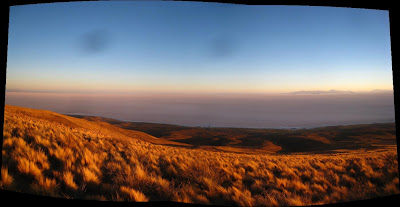
My tour was divided in two parts. Almost no one wants a 4 days tour so the agency adapted a schedule for me so that I could spend one day near a volcano with a view on the salar before going on with a group for 3 days.

And I loved it, to be almost the only tourist on this "island", climb closer to the crater of the volcano and then be really lucky with a really international group in which we had an excellent atmosphere. These 4 days together have gone really fast, cruising through the beautiful landscapes and inventing choregraphics for the pictures.


Talking about the pictures I have to admit that I am not happy with mines. Since my last day in Maras when kids dropped my camera I have dust on my lens and this has really taken down the quality og my pictures, especially the ones with a bright sky like in the salar. But somehow a bit as a miracle they receded after the second fay of the tour!!!!

My tour was divided in two parts. Almost no one wants a 4 days tour so the agency adapted a schedule for me so that I could spend one day near a volcano with a view on the salar before going on with a group for 3 days.

And I loved it, to be almost the only tourist on this "island", climb closer to the crater of the volcano and then be really lucky with a really international group in which we had an excellent atmosphere. These 4 days together have gone really fast, cruising through the beautiful landscapes and inventing choregraphics for the pictures.


Talking about the pictures I have to admit that I am not happy with mines. Since my last day in Maras when kids dropped my camera I have dust on my lens and this has really taken down the quality og my pictures, especially the ones with a bright sky like in the salar. But somehow a bit as a miracle they receded after the second fay of the tour!!!!
Bolivia, difficult start / Pas trop de bol en Bolivie
My first days in Bolivia have been difficult. You know about the drunk people in Sorrata and on top of that I got an inflammation of teh articulation of the jaw. It happened because I extracted a wisdom tooth just before leaving Peru for the cheapest price ever (7 euros) but for such a price it was not made with the sweetest delicacy.. Because of that I had to stay 10 days in La Paz instead of the 3 days I was planning. Next to the fact that it is really painful, I could not open my mouth (to date I still have not fully recovered) and eating had become really annoying as it would take me 4 times longer to eat half of what I am used to. Luckily for me I was with Aurore otherwise these 10 days would have felt much more difficult. My biggest fear of traveler is to be ill at a moment I am alone. Although I had my share of diseases in this trip just once I had one when I was alone (in Cuenca, Ecuador).
But now I am on the road again, I must say I love it. Sucre was really relaxed and beautiful, Potosi was intersting, the salar de Uyuni brought me nature as I love it and I have been again in contacts with the travelers community which is something I missed during my time in Cusco.
But now I am on the road again, I must say I love it. Sucre was really relaxed and beautiful, Potosi was intersting, the salar de Uyuni brought me nature as I love it and I have been again in contacts with the travelers community which is something I missed during my time in Cusco.
Elections in Peru
Early October there were local elections in Peru. Here are a few remarks on and after the campaign.
A typical way to do politics in Peru seems to makie a picture of a candidate, put a giant poster on a 4*4 and drive around town with loud speakers.
A typical program is to announced a huge list of new projects/buildings never mentioning how to finance them. Next to this program even Chirac would soumd like a serious politician.
Shows of supporters are sometimes arranged by giving money for people to show up at rallyes.
Everyone denounces corruption but the vast majority of incumbents is corrupted. SOme candidates give themselves the title engineer or doctor to appear more serious (and to impress uneducated people) even if they have made no studies.
Corruption plagues Peruvian politics. A candidate said that 30% of all budgets disappear because of corruption and some people estimate the reality to be higher than this.
A candidate in a rough neighbourhood fakes to have been shot (in his car) by people paid by its opponent.
On election day and even on the day before, alcohol is prohibited. This is the same in all South American countries. My Chilean friend explained to me that on election day in the past in Chile there were gatherings where a candidate would give free alcohol and at the end of teh day would ask the people to go and vote for him.
A few days after the elections, among many accusations of rigged elections, there was one case near Cusco where people went to burn down the house of the winning candidate becase they said he was corrupted.
In Maras where I taught, the corrupted mayor lost the elections. He decided to cut the budget for the teacher of computing for the school as a retaliation because the Head of teh school had never been a supporter of him.
A you can see Peru is a democracy but it has some flaws...
A typical way to do politics in Peru seems to makie a picture of a candidate, put a giant poster on a 4*4 and drive around town with loud speakers.
A typical program is to announced a huge list of new projects/buildings never mentioning how to finance them. Next to this program even Chirac would soumd like a serious politician.
Shows of supporters are sometimes arranged by giving money for people to show up at rallyes.
Everyone denounces corruption but the vast majority of incumbents is corrupted. SOme candidates give themselves the title engineer or doctor to appear more serious (and to impress uneducated people) even if they have made no studies.
Corruption plagues Peruvian politics. A candidate said that 30% of all budgets disappear because of corruption and some people estimate the reality to be higher than this.
A candidate in a rough neighbourhood fakes to have been shot (in his car) by people paid by its opponent.
On election day and even on the day before, alcohol is prohibited. This is the same in all South American countries. My Chilean friend explained to me that on election day in the past in Chile there were gatherings where a candidate would give free alcohol and at the end of teh day would ask the people to go and vote for him.
A few days after the elections, among many accusations of rigged elections, there was one case near Cusco where people went to burn down the house of the winning candidate becase they said he was corrupted.
In Maras where I taught, the corrupted mayor lost the elections. He decided to cut the budget for the teacher of computing for the school as a retaliation because the Head of teh school had never been a supporter of him.
A you can see Peru is a democracy but it has some flaws...
Bad combination
I met Aurore on the slopes of the canyon to get to Choquequirao.
Since then we did three treks together and it has always happened something:
1) in Ausangate our guide abandoned us on the last day forcing us to carry our bags for the last 10 kms (that luckily were flat).
We then met in La Paz for two other treks:
2) the first in Sorrata, supposedly a great place to trek which reminded me of the South of Colombia but less nice. The event on the day we went to an high altitude lake was that when we came back we got problems with two heavily drunk miners of the small village that makes the departure and the end of the trek. To avoid more problems that some endless and fuitless discussions with some idiots determined to get money from us we paid them little and went away because one never knows where this could end with drunk people feeling they are above the laws. The incident reflects both the racism of a part of the Bolivian popuplation toward foreigners and a change of attitude of some people since Bolivia has an indigeneous president.
3) the last rek was a 2 days descent of an Inca trail through a rain forest. It was really humid with dense vegetation. I would have been happy with a machete! We were a group of 6 when our guide (the one of us who had done this trek 4 times) slipped on a wooden bridge and fell 4 meters as well as banged his head on a rock and did himself s deep cut. This was the end of the rek and luckily after the help of one of us who is a doctor he could come back to the start and get treated at the hospital.


The conclusion of all this is that Aurore and I decided no to trek anymore together.
Since then we did three treks together and it has always happened something:
1) in Ausangate our guide abandoned us on the last day forcing us to carry our bags for the last 10 kms (that luckily were flat).
We then met in La Paz for two other treks:
2) the first in Sorrata, supposedly a great place to trek which reminded me of the South of Colombia but less nice. The event on the day we went to an high altitude lake was that when we came back we got problems with two heavily drunk miners of the small village that makes the departure and the end of the trek. To avoid more problems that some endless and fuitless discussions with some idiots determined to get money from us we paid them little and went away because one never knows where this could end with drunk people feeling they are above the laws. The incident reflects both the racism of a part of the Bolivian popuplation toward foreigners and a change of attitude of some people since Bolivia has an indigeneous president.
3) the last rek was a 2 days descent of an Inca trail through a rain forest. It was really humid with dense vegetation. I would have been happy with a machete! We were a group of 6 when our guide (the one of us who had done this trek 4 times) slipped on a wooden bridge and fell 4 meters as well as banged his head on a rock and did himself s deep cut. This was the end of the rek and luckily after the help of one of us who is a doctor he could come back to the start and get treated at the hospital.

The bridge

and under the bridge...
The conclusion of all this is that Aurore and I decided no to trek anymore together.
Sunday, November 07, 2010
Update is coming and survey
Hey all,
I did not forget my blog but in Bolivia updating a blog using Internet sounds like a challenge so I just delayed it and will do it in a couple of days with my adventures in La Paz, Sorrata, Sucre, Potosi, Uyuni and Tupiza.
I am now in the north of Argentina and I will show you as well the first pictures.
Finally I just launch a small survey about which country would you prefer to come and visit me if I get the chance to live in South America (see on the right).
I did not forget my blog but in Bolivia updating a blog using Internet sounds like a challenge so I just delayed it and will do it in a couple of days with my adventures in La Paz, Sorrata, Sucre, Potosi, Uyuni and Tupiza.
I am now in the north of Argentina and I will show you as well the first pictures.
Finally I just launch a small survey about which country would you prefer to come and visit me if I get the chance to live in South America (see on the right).
Thursday, September 30, 2010
Call me profe
I have not written for a while and probably to the surprise of many (considering my past articles) I am still in Cusco. But the main difference with July is that I switched from a traveler to a volunteer.
I had this idea for a while as many travelers have met do in general a volunteering at some point. After more than 18 months of continuously moving on I felt I was ready to give it a try and stay a bitm ore in one place. The irony is that it takes place in Cusco whereas I would have loved to stay in Colombia or I have even tried to go to help Chile when there was the earthquake last February.
Since late August I am an English teacher in the school of Maras. I teach twice a week to 6 classes (1h30 each class) of a primary school. I found this opportunity knowing the family of the restaurant Muña (see specific album). Maras lays one hour away from Cusco (which means to get up as early as 5h30!!!), close to the famous Moray, and is a country-side school. Here it is not about training the future generations of leaders for the country, it is about learning Spanish to the kids who all speak Quechau as a native language, the it is about learning them to brush their teeth, it is something really social for kids who help their family in the fields when they are not at school.

Although Maras has Moray nearby the turistic boom has not spread over its population: there is water only 2 hours per day, really few people in the village have a car (all the kids go hme walking) and there is no internet, and none of the kids has a computer has a computer at home. I was also told that two years ago some Canadians made a study that showed that many kids suffer malnutrition which hinders their capacity to learn. Therefore although the kids are really happy to have classes of English, it is not a priority for them: almost no one does his homework and most of the time half the pupils do not bring its materials of the week before. English is then more having some good time and learning a bit.

On my side I learn a lot. I am not a teacher and having kids that young (the youngest are 6, the oldest 13), keeping them interested, making sure they ALL learn something is quite a challenge for me. Although sometimes I wonder what I do here when no one brings what I asked to bring I love doing it and will do it until the end of October.

I am also really grateful to the professors who have welcomed me in such a nice way. We have "breakfast" all together each day at the first break (10am); they cook what would be rather for me a lunch but I want once to have a French breakfast with croissant, baguette, yogurts, fruit juices and cakes.

I went to see the teachers in the "teachers Olympics" of the surroundings of Maras where competition does not only include sports but also reading out loud a text, traditional dance, sapo (a game where you throw tokens in holes to get points) etc... Unfortunately I was not allowed to participate due to the fact that 2 years ago a gringo won all the disciplines of athletics.

All in all this makes a wonderful new experience and a new step in my trip.
I had this idea for a while as many travelers have met do in general a volunteering at some point. After more than 18 months of continuously moving on I felt I was ready to give it a try and stay a bitm ore in one place. The irony is that it takes place in Cusco whereas I would have loved to stay in Colombia or I have even tried to go to help Chile when there was the earthquake last February.
Since late August I am an English teacher in the school of Maras. I teach twice a week to 6 classes (1h30 each class) of a primary school. I found this opportunity knowing the family of the restaurant Muña (see specific album). Maras lays one hour away from Cusco (which means to get up as early as 5h30!!!), close to the famous Moray, and is a country-side school. Here it is not about training the future generations of leaders for the country, it is about learning Spanish to the kids who all speak Quechau as a native language, the it is about learning them to brush their teeth, it is something really social for kids who help their family in the fields when they are not at school.

The site of Moray where Incas did some experinces for agriculture

On my side I learn a lot. I am not a teacher and having kids that young (the youngest are 6, the oldest 13), keeping them interested, making sure they ALL learn something is quite a challenge for me. Although sometimes I wonder what I do here when no one brings what I asked to bring I love doing it and will do it until the end of October.

I am also really grateful to the professors who have welcomed me in such a nice way. We have "breakfast" all together each day at the first break (10am); they cook what would be rather for me a lunch but I want once to have a French breakfast with croissant, baguette, yogurts, fruit juices and cakes.


All in all this makes a wonderful new experience and a new step in my trip.
Wednesday, September 29, 2010
Update on pictures
Hola
Because this has been a while I made links on my blog I will for once post all of the new albums in a post
Since my trek spree I went to see nearby Cusco for two weeks the family of a friend. They run a restaurant for tourists and I gave them a hand at various works. Although you won´t see it a lot n the pictures there is a sharp contrast between the quality of the erstaurant (I really love it) and the simple life these people are living (no fridge, no hot water...). Find all the photos in this album.
Then I have the album of my time at the school of Maras as well as the surroundings of Maras/Moray.
As I stayed more than three months in Peru I had to renew my passport. I then crossed to Bolivia for less than two days but it gave me the time to got o the Isla del Sol on the lake Titicaca and I loved it.
Finally two albums that will keep growing because they represent the two sides of Cusco:
The turistic side of the center of Cusco
The other side of Cusco, the one I am experiencing since I left the centre, simply more much Peruvian.
Plus I have published two new articles below....
Enjoy your readings and the pictures.
Because this has been a while I made links on my blog I will for once post all of the new albums in a post
Since my trek spree I went to see nearby Cusco for two weeks the family of a friend. They run a restaurant for tourists and I gave them a hand at various works. Although you won´t see it a lot n the pictures there is a sharp contrast between the quality of the erstaurant (I really love it) and the simple life these people are living (no fridge, no hot water...). Find all the photos in this album.
Then I have the album of my time at the school of Maras as well as the surroundings of Maras/Moray.
As I stayed more than three months in Peru I had to renew my passport. I then crossed to Bolivia for less than two days but it gave me the time to got o the Isla del Sol on the lake Titicaca and I loved it.
Finally two albums that will keep growing because they represent the two sides of Cusco:
The turistic side of the center of Cusco
The other side of Cusco, the one I am experiencing since I left the centre, simply more much Peruvian.
Plus I have published two new articles below....
Enjoy your readings and the pictures.
The shoe challenge
Life is full of unexpected events. When I started my trip I bought a new pair of hiking shoes because I knew I would trek. But I never knew that my trip would last so long and that I would not be able to replace them in South America...
I was tough with my shoes and especially in Patagonia they have been tested many times...


The extremely wet Caleta Tortel in Chile (I took the pic but the same happened to me) and the hardest day of teh Torres del Paine.
This means that since the end of January when I came back from Santiago I could easily have considered getting a new pair. The problem is that in Chile I could not find size 47 (I admit I did not look a lot).
The months passed by and my shoes automatically got a new ventilation system of 4 holes, rotten laces and all sorts of signes that mean "we are tired". The look of most South Americans has also changed as I see many people staring at my feet in surprise and sometimes disdain: "How can a gringo wear this rubbish!!!"

I will take another picture to show you how bas they look.
A little background explanation; in South America you still have everywhere shoe-polishers to make sure your shoes look clean and I am convinced this is a sign of social differenciation, especially from the really poor who just have sandals barely big enough for their swollen feet. So my shoes put me in a category that does not suit with my "gringohood" and the widespread perception here that gringos are so rich that they can pay 5 times the usual price without being bothered, that my house is made of gold and that each morning when I open my door to the garden I find the $ (Euros in Europe) that have fallen down during the night like rain because this is how easy is life for us gringos, right? (thanks to MTV for showing the life of the rich and conveying these myths).
To come back to my shoes that is now 4 months I´m trying to get some new ones and no, 47 does not exist in a country where 44 is the biggest size. This has been confirmed by the 50 or more shops I have visited.
As a consequence my shoes will have to survive until the end of the trip and I will continue seeing the look of the South Americans wondering about this strange combination gringo/rotten shoes.
Subscribe to:
Posts (Atom)